Sunday, April 13, 2014
Pro-Russian gunmen seize more buildings in east Ukraine
SLAVYANSK, Ukraine - Kalashnikov-wielding gunmen on Saturday seized a police station and a security building in Ukraine's restive eastern industrial heartland amid spreading protests to press for the heavily Russified region to join Kremlin rule.
The coordinated attacks and a subsequent raid by a few hundred pro-Russian protesters on the police headquarters of the local capital Donetsk underscored the volatility of the crisis ahead of peace talks between EU and US diplomats and their Moscow and Kiev counterparts in Geneva on Thursday.
Ukraine's interim leaders have been facing unceasing pressure from Russia since their February ouster of an unpopular Kremlin-backed president and decision to seek closer ties with the West.
Moscow has massed tens of thousands of troops on Ukraine's eastern border after annexing its Black Sea peninsula of Crimea and nearly doubled the rates it charges Kiev for gas.
Russia is now ready to demand prepayment from the cash-strapped government for future gas deliveries or halt supplies - a cutoff that would impact at least 18 EU countries and add further urgency to the worst East-West standoff since the Cold War.
But the seizures more immediately highlight how little sway Kiev's untested leaders have over pro-Russians who have since April 6 controlled the Donetsk government seat and a state security building in the nearby eastern city of Lugansk.
Ukrainian Prime Minister Arseniy Yatsenyuk visited the region on Friday in a failed bid to pacify protesters with a vague promise of more sweeping local rights.
'Armed terrorists'
The morning police station raid and a subsequent attack of the regional security service centre happened in Slavyansk - a riverside town of 100,000 about 60 kilometres (35 miles) north of the regional capital Donetsk.
Ukraine's interior ministry said the first assault was led by 20 "armed men in camouflage fatigues" whose main purpose was to seize 20 machine guns and 400 Makarov guns stored in the police headquarters "and to distribute them to protesters".
"Our response will be very severe," Interior Minister Arsen Avakov wrote on his Facebook page.
"There is zero tolerance for armed terrorists." An AFP reporter saw the Slavyansk police station being surrounded by armed men in masks and camouflage who had set up a barricade of old tyres and dumpsters in front of the police headquarters.
The gunmen aggressively shoved aside Western reporters and only allowed Russian-speaking media anywhere near the building.
"The entire city... will defend the guys who seized this building," Slavyansk Mayor Neli Shlepa told Russia's Life News television outside the police headquarters.
The interior ministry said some of the same gunmen had later occupied the city's state security service building.
"The protest participants are continuing to arm themselves with weapons seized from the police," the interior ministry said in a statement.
Singaporean man torches himself in front of clinic
JOHOR BARU - A Singaporean man torched himself in front of a clinic along Jalan Harimau in Taman Century here.
The 42-year-old man had, prior to the 9am incident yesterday, bought four litres of petrol for RM8 (S$3) from a petrol station just two metres away from the clinic.
Johor Baru South OCPD Supt Sulaiman Salleh said the victim told the pump attendant that his car was out of petrol and it was parked near the clinic.
"After filling up a plastic container with petrol, he walked to the clinic at Jalan Harimau and torched himself there and ran to a nearby hotel before falling into a drain," he said.
Supt Sulaiman said the police did not know why the victim torched himself and urged witnesses to come forward.
He said the victim, who suffered serious burns, was in critical condition and still unconscious at the Hospital Sultanah Aminah here.
MH370: We didn't know he made a call, says pilot's brother
KUALA LUMPUR - Brother to missing Malaysia Airlines Flight MH370 the first officer Fariq Abdul Hamid said he did not know about the phone call made by his sibling when it flew over Penang the night it disappeared.
Afiq Abdul Hamid, 20, said the last time he spoke to his brother was a week before the incident, adding that he did not know who Fariq could have been trying to contact and added that none of his family members were told of it by the authorities.
The chemical engineering student at Universiti Teknologi Petronas said he understood the police were still carrying out investigations and could not reveal anything just yet as it might jeopardise investigations.
On Friday, the NST traced the source of a call made on board MH370 to Fariq's phone.
It was learnt that investigators had been poring over this discovery as they try to piece together what had happened moments before the Boeing 777-22ER twinjet went off the radar, some 200 nautical miles (320km) northwest of Penang, on March 8.
Sources say the aircraft with 239 people on board was flying at an altitude low enough for the nearest telecommunications tower to pick up Fariq's phone signal.
His call, however, ended abruptly, but not before contact was established with a telecommunications sub-station in the state.
However, the NST was unable to determine who Fariq was trying to call as sources chose not to divulge details of the investigation. The links that police were trying to establish were also unclear.
"The telco's (telecommunications company's) tower established the call that he was trying to make. On why the call was cut off, it was likely because the aircraft was fast moving away from the tower and had not come under the coverage of the next one," the sources had said.
It was also established that Fariq's last communication through the WhatsApp Messenger application was about 11.30pm on March 7, just before he boarded the aircraft for his six-hour flight to Beijing.
The NST was also told that checks on Fariq's phone history showed that the last person he spoke to was "one of his regular contacts (a number that frequently appears on his outgoing phone logs)".
This call was made no more than two hours before the flight took off at 12.41am from Kuala Lumpur International Airport (KLIA).
A different set of sources close to the investigations told the NST that checks on Fariq's phone showed that connection to the phone had been "detached" before the plane took off.
"This is usually the result of the phone being switched off. At one point, however, when the airplane was airborne, between waypoint Igari and the spot near Penang (just before it went missing from radar), the line was 'reattached'."
In Sintok, police were investigating the company involved in the cleaning of Malaysia Airlines (MAS) flight MH370's cabin before it departed from KLIA to Beijing, China, on March 8.
Inspector-General of Police Tan Sri Khalid Abu Bakar said police were looking into all angles, including loopholes, during the cleaning.
"We are looking at every possibility and investigation is on-going," he said yesterday.
On Friday, Khalid had said police were also investigating a catering company in charge of the preparation of food on board MH370 to ascertain if the dishes had been poisoned.
Khalid was reported as saying that police had to re-look at certain points in the probe to shed more light into the tragedy.
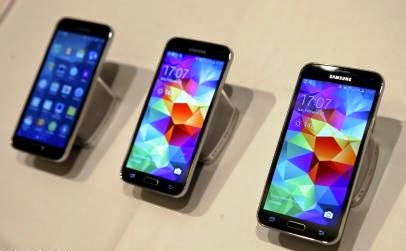
Samsung Galaxy S5 makes global debut
SEOUL - The latest version of Samsung's flagship Galaxy smartphone went on sale worldwide Friday, days after the electronics giant announced it was facing a second consecutive quarter of profit decline.
The Galaxy S5 has a lot riding on it to steer the South Korean firm's profit-making machine back on track as growth in smartphone sales slows, with mature markets like North America and Europe near saturation.
Reviews of the S5 have mostly concluded that it is one of the best high-end smartphones on the market, but there is also a general consensus that it lacks the "wow" factor needed to differentiate it from its predecessors and competitors.
"It can swim, but it won't make any waves," was the verdict of the Wall Street Journal, referring to one innovation in the S5's waterproof covering.
"The Galaxy S5 is a good phone. It earns an unreserved recommendation," said the Washington Post.
"But the truth of the matter is that there's really nothing here that's worth breaking your contract to buy," it added.
Samsung's mobile unit has been the driving force behind the record profits of recent years, and it needs the S5 to perform well as a retort to doom-mongers who say the company lacks a clear strategy to flourish in an increasingly competitive, saturated market.
Samsung made more than 30 per cent of all smartphones sold in the world last year, nearly twice the share of its arch-rival Apple.
But on Tuesday, the company estimated its first quarter operating profit at 8.4 trillion won (S$9.94 billion), marking a second straight year-on-year decline.
As well as the constant challenge from Apple, Samsung has had to face the rapid expansion of smaller rivals like China's Huawei, which has pressured it into rolling out cheaper handsets to woo consumers in emerging markets, especially China.
MH370 hunt goes on after Australia signals great confidence
PERTH, Australia - Ships and planes pursued Saturday the search for the missing Malaysian airliner off Australia after Prime Minister Tony Abbott said he was "very confident" that signals from the black box had been detected.
The Australian-led search for the Boeing 777, which disappeared en route from Kuala Lumpur to Beijing, is racing to gather as many signals as possible to determine an exact resting place before a submersible is sent down to find wreckage.
"Today, Australian defence vessel Ocean Shield continues more focused sweeps with the towed pinger locator to try and locate further signals related to the aircraft's black boxes," JACC said.
Ocean Shield has picked up four signals linked to aircraft black boxes, with the first two analysed as being consistent with those from aircraft flight recorders.
The beacons on the plane's flight data and cockpit voice recorders have a normal battery lifespan of around 30 days. MH370 vanished March 8.
AP-3C Orion surveillance aircraft were also carrying out acoustic searches in conjunction with Ocean Shield, the statement said adding that the British oceanographic ship HMS Echo was also working in the area.
Saturday's total search zone covers 41,393 square kilometres (15,982 square miles) and the core of the search zone lies 2,330 kilometres (1,450 miles) northwest of Perth.
"This work continues in an effort to narrow the underwater search area for when the Autonomous Underwater Vehicle is deployed," JACC said adding that there have been no confirmed signal detections over the past 24 hours.
Sunday, February 16, 2014
An atheist meets an al-Shabab 'recruiter'
Abubakar Shariff Ahmed is
not a hard man to find. Ask around in the Majengo area of Mombasa and
people will know where he lives.
But ask around too conspicuously and you are likely to arouse suspicion. Mr Ahmed is perhaps better known by his nickname, Makaburi. It means "graveyard" in Swahili.
His name features on US and UN sanctions lists of people suspected of involvement in terrorism - accused of recruiting young Kenyan Muslims for violent militant activity in Somalia.
He himself believes the Kenyan police will one day try to kill him. So he is careful about his security.
We had made an appointment to see him one recent, sweltering afternoon, as the shadows lengthened on Majengo's dusty backstreets. We parked outside a pink-coloured apartment block, next to a car mechanic's workshop.
I wandered into a courtyard. It seemed empty. Suddenly, the clatter of flip flops on concrete and the cries of boys kicking a football. I asked one of them if he knew where Makaburi was. Not around, he shrugged.
I went back outside to wait. Two slightly older teenagers, with serious-looking beards, were by now sitting against the wall, next to a defunct fridge with a Coca Cola logo peeling off the side.
From Our Own Correspondent
- Insight and analysis from BBC correspondents, journalists and writers from around the world
- Broadcast on Radio 4 and BBC World Service
"Where is Makaburi?" I asked. No response.
So we sat there without talking, listening to the sounds of
the neighbourhood drift on the evening air, still and heavy with
humidity. Finally, he showed. Makaburi is one of those large men who carries his weight well - he moves slowly, but he is quick to smile and he exudes that easy-going manner that comes with self confidence.
We recorded an interview in his fourth floor flat - the two bearded youths came with us, watching proceedings with ill-concealed suspicion and hostility.
Makaburi's manner may be charming but his beliefs are uncompromising. The time is near he told me. An army of Allah will rise up out of the desert. It will come bearing a black flag and establish a global Islamic caliphate.
He denies recruiting for al-Shabab, or calling on his followers to travel to Somalia to fight.
"I do not have any followers," he says at one point. I nod towards the bearded teenagers. "Who are they?" I ask. "They have come to ask my advice," he says.
“Start Quote
MakaburiI have not listened to music for more than a decade... where there is music, there is ungodliness”
His advice is that, if Islam is under attack, which he says it is, then it is every Muslim's duty to wage jihad.
After the interview we sat together on the roof where the
breeze had picked up and the air was beginning to cool. "Let me invite
you to Islam," he said, breaking once more into that charming smile. I smiled back. "Regretfully," I said, "I am an atheist."
He screwed up his face, and waved towards the two bearded students, loitering now next to a nearby pigeon coop.
"Look at them," he said. "Each from a different Kenyan tribe, and me from yet another. But thanks to Islam, we are brothers. Religion brings us together."
I countered with a story I had once heard on this very programme. A BBC reporter in Bosnia, during the war in the 1990s, had asked an elderly gentleman whether he was a Croat or a Muslim?
The man's reproachful response had struck home: "I am a musician," he had said. Music could unite where religion divided. Makaburi was unimpressed.
"Everywhere there is music, there is ungodliness," he said
He told me a story about a sailor he had known who had spent a long time at sea aboard a cargo ship. According to custom, after going to the toilet, he would wash instead of wipe.
But he was the only Muslim on board, and eventually the other sailors confronted him about the splashes of water around the loo. Could he stop it please, they found it unhygienic.
They were sitting at breakfast and there was a can of condensed milk open on the table. Makaburi's sailor friend took the hand of one of his colleagues and dabbed it with some of the sweet sticky substance.
"Now wipe it off with a tissue," he told him, "then lick your hand. Tell me does it still taste of condensed milk?"
The sailor did so and admitted that yes, his hand still tasted sweet.
Did his hand still taste of milk? It did not. The point was made.
"But surely this is not what it all boils down to," I protested. "Of course not," Makaburi beamed. "But let me give you a copy of the Koran," he pleaded. "You read it, you will see."
I promised I would, but on one condition. Would Makaburi in return listen to my favourite jazz album, and tell me honestly what he thought?
He looked disgusted. "No," he said, "no way. I have not listened to music for more than a decade." And so we parted, our cultural exchange, between atheist and Islamist, unconsummated.
More healing sleep for newborns
Sleeping like a baby is
an oft-used cliche. But while sleep is crucial for sick and premature
babies to grow and recover, it can be difficult in a bright, noisy
hospital.
However those in a specially-designed ward in Bath can be confident of getting plenty of rest.When we try to soothe a baby at home we keep the bedroom dark and quiet. Yet many sick babies are cared for in hospital wards that are neither particularly restful, dark nor quiet.
"There's not usually any controllable light in a hospital, it's very brightly lit and noisy - a technical environment," says Bernie Marden, a consultant neonatologist at the Royal United Hospital in Bath.
The nappy sensor
The new neonatal ward he runs has been designed with the needs
of the families, babies and clinicians in mind - resulting in a fifth
more sleep for the infants. To check that the new unit provided a better environment for the babies a special movement monitor was created to record the babies' behaviour.
The man behind the device is Professor Mark Tooley, head of medical physics at the hospital.
It is about the same size and shape as a domino and even though it is a relatively simple device, there were challenges in its design.
"We had to make sure it couldn't get hot or interfere with the baby's wellbeing in any way. The hospital's ethics committee were rightly very strict about this," he said.
It contains three accelerometers, to detect movement in three different planes and this information is fed wirelessly to a computer. The device's battery can last up to five weeks.
Calming Putting it under the babies' armpit was the initial idea but the ethics committee said no.
"Putting it onto the nappy seemed the ideal solution.. but we did lose a few when nappies were changed because they were white and became almost invisible. We have now put a colourful sticker on them."
Baby Laila and her twin sister Aicha were born nearly three months early and will stay in the neonatal unit until around their original due date.
Their mother Samantha Rhodes relaxes in a comfortable reclining chair, with Aisha cradled on her chest.
Laila and Aicha in the new unit with their mother Samantha
Both girls are now both feeding well and growing in the peaceful, dimly-lit neonatal unit. Samantha and her daughters will be here for quite a while - probably until close to their original due date - so it is just as well they feel at home here: "It's not like a hospital, it's really relaxing."
It's not just premature babies who need extra help and support.
One in 10 of all babies born at this hospital will spend some time in the neonatal unit for a variety of reasons - usually because they are premature or the stress of birth.
Bernie Marden says: "In the new unit we have noticed that materials like wood have encouraged a calming environment - the families tend to tone down their voices.
"In the babies we studied we found that they had 20% more sleep here in the new unit - and while they're resting they're growing, and recovering.
"There is a slightly noisier time during the morning but after then it quietens down again. The overall noise level dipped by eight decibels, compared with the old unit. And the parents are more involved in their care."
Flatpack ward The architects behind the new unit - Fielden Clegg Bradley Studios - had never built a healthcare facility before.
Jo Wright, who was in charge of the project, said: "In the old unit space was very tight, everyone was on top of each other. We didn't want to go the tried-and-tested route.
"The use of natural materials like wood came out of a desire to be sustainable. We obviously had to verify it was OK with the infection control team.
"Much of it came as a flatpack and minimised disruption as we were building close to the delivery suite."
The impact of the new neonatal unit was evaluated by Mike Osborn - a clinical psychologist at the hospital who specialises in supporting patients affected by chronic pain and cancer.
"The old unit had no natural light - it was like being inside a hot, dusty submarine, you couldn't tell if it was day or night.
'Less anxious and tense' "And because babies are small there was a feeling that the department could be small, but it was difficult for the mums to get to their babies it was so cramped."
The parents appear to benefit also from the light and space in the new unit - the bar stools they used to sit on have been replaced with reclining comfortable chairs.
"I used to get called down to parents in a panic - as if they'd had 17 espresso coffees. Now they're less anxious and tense and I sometimes have to wake them up to talk to them."
Breastfeeding rates have gone up - in the new unit 90% of the babies go home breastfeeding, compared with 64% in the old unit.
Mike Osborn says the positive experience in the neonatal unit has provided a blueprint for the rest of his hospital: "We are hoping to rebuild our cancer department and now we have a benchmark for building compassionate environments here and elsewhere.
"Treatments can be horrible but we can do something to soothe our patients."
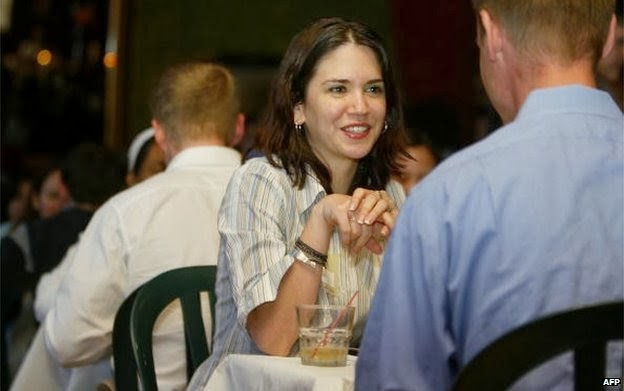
Speed dating: Why are women more choosy?
Women are twice as choosy as men when they go speed dating, research suggests. Why might that be?
Trying to work out who is single in a bar, approach them and
asking them out before you know anything about them is not a very
efficient way of finding a girlfriend or boyfriend.There is a solution - speed dating, where a group of singles meet at an event in a bar or cafe. The men move from table to table for a fleeting date with each woman, lasting typically between three to four minutes.
Afterwards the participants tell the organisers, often online, which people they want to see again.
A recent study into speed dating habits concluded that if men and women go to an evening and have 22 separate dates, men are keen to see about five women again, while women would only choose to see two again, on average.
That means that for every offer a woman makes, she has roughly a 50-50 chance that the man will want to see her again too.
But for every offer a man makes, he only has a one in five chance that the desire to meet again is reciprocated.
More or Less: Behind the stats
The research
was done by economists Michele Belot from the University of Edinburgh
and her colleague Marco Francesconi from the University of Essex, who
collected data from 84 speed dating events involving 3,600 people in the
UK.
This controlled environment is something that excites some
economists as they are perfect for observing market forces at work- in
this case the dating market. But why are men less fussy?
"This is something that evolutionary psychologists and biologists do recognise," says Belot. "We know that across a whole range of behaviours women tend to take fewer risks.
"They relate this to the fact that making mistakes are much more costly for women than for men because of childbearing. So obviously if you make a mistake in dating the wrong man and having a relationship with the wrong man, you might have nine months carrying a child, then caring for a child. While for men, the costs are lower."
Other academic work suggests that because men historically have not been so involved in parenting, they devote more time to "short-term mating", so they're not looking further than a date.
A study in the US, on the other hand, suggests the difference might simply be down to the seating arrangements, because the convention is for women to sit still at the events, while men move round and approach each woman.
The researchers found that when the roles were reversed at speed dating events, and women moved round to approach the men, they found that women made more offers than they did at events when they sat still. One possible theory is that the person who moves has more confidence.
"For both men and women, education and professional status matters. We found that women prefer taller men and men prefer slimmer women," says Belot.
Perhaps this is not a big surprise. But it turns out - people are often ready to compromise on these preferences.
So, if a woman likes academic men, but she goes speed dating one night and no one is particularly academic, she will lower her expectations on this occasion, and instead pick men who next best fit her criteria.
Belot thinks one explanation is that people who go to a speed dating event assume that is representative of the pool of available single people.
But if you break out of the mould of what you think you want, it could actually be beneficial for society at large.
People marry people very similar to themselves - from the same socio-economic background for example. And economists argue that this stops social mobility between generations.
For instance, people from rich privileged backgrounds marry each other, while people from more disadvantaged backgrounds marry each other.
But speed dating shows that people are not too fixed in their views of who they should date, says Belot, if they are given the opportunity.
"It's interesting to see [with speed dating] it gives a bit of hope that if you do mix people, they do tend to mix."
Ukraine protesters quit key building
Ukraine protesters are
vacating city hall in Kiev, the symbolic centre of prolonged
anti-government demonstrations, eyewitnesses say.
"City hall is almost completely evacuated", opposition spokesman Ruslan Andriyko told AFP.The government had promised to drop all charges against demonstrators if they vacate government buildings and lift roadblocks by Monday.
City hall has been occupied by protesters for more than two months.
The protests started in November when President Viktor Yanukovych abandoned plans to sign a far-ranging association agreement with the EU.
Instead, he advocated closer trade relations with Russia, which dominated Ukraine for centuries until the fall of the Soviet Union in 1991.
Prisoners released People began walking out of the building on Sunday morning.
The Swiss ambassador in Kiev entered the building soon afterwards in order to help transfer the building to the control of the authorities.
Switzerland currently holds the rotating presidency of the Organisation for Security and Cooperation in Europe.
On Friday authorities released the last of 243 prisoners who were arrested during the unrest.
Mr Yanukovich passed an amnesty law earlier this month and agreed to negotiate with the opposition after at least four people were killed in protests.
This weekend, some opposition members continued to call for his departure, and another demonstration is due to place in Kiev's central Independence Square.
"The only subject of negotiation with Yanukovych is the conditions of his departure," jailed opposition leader Yulia Tymoshenko said on Saturday.
She went to accuse the Ukrainian president of being under the control of Russia's Vladimir Putin, his major international backer.
Protesters created their own ad-hoc security forces in the capital Kiev
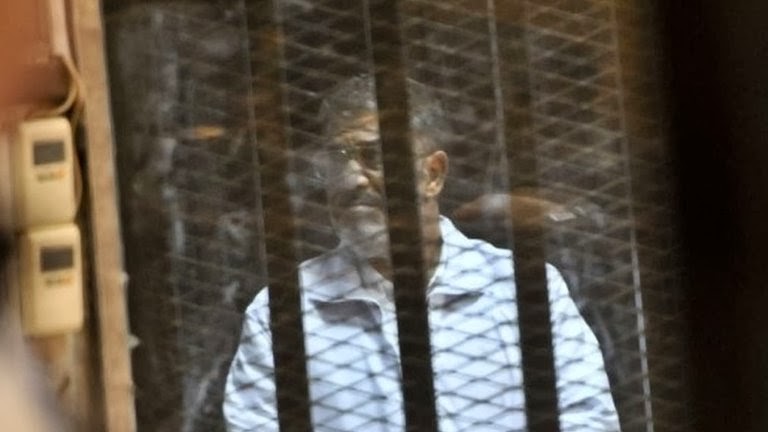
Morsi spying and terror trial opens
Deposed Egyptian
President Mohammed Morsi has begun a new trial, on charges of espionage
and conspiring to commit acts of terror.
He and 35 others are accused of working with Lebanese and Palestinian groups to carry out attacks in Egypt.The charges are one of four prosecutions that the Islamist former leader now faces.
Mr Morsi was ousted by the military last July following mass street protests against his rule.
Since then there has been a severe crackdown on his Muslim Brotherhood group, as well as on other activists seen as hostile to the military-backed government.
The Brotherhood has been declared a terrorist organisation and authorities have punished any public show of support for it.
Other senior Brotherhood figures are also facing a raft of charges, including supreme guide Mohammed Badie and his deputy and former presidential candidate Khairat al-Shater.
At least 1,000 people have died in clashes between security forces and pro-Morsi protesters since he was deposed, with thousands more arrested.
Morsi defiant Mr Morsi was brought to Cairo's police academy on Sunday morning by helicopter from the Burj al-Arab prison where he is being held.
In this latest trial, Mr Morsi is accused of collaborating with the Palestinian movement Hamas, Lebanon's Hezbollah and Iran's Revolutionary Guards. If convicted he could receive the death penalty.
Four trials of Mohammed Morsi
- Incitement of supporters to commit violence and murder during break-up of December 2012 protest
- Conspiring with foreign organisations (Hamas and Hezbollah) to commit terrorist acts
- Murder of prison officers in jailbreak during 2011 uprising against President Mubarak
- Insulting the judiciary
Proceedings in two other trials have already begun:
- The first opened in November on charges of inciting the killing of protesters near the presidential palace when he was in office in 2012.
- In January another trial opened concerning his escape from prison in a jailbreak in 2011, during which police officers were killed.
- The fourth trial will be on charges of insulting the judiciary.
In his previous court appearances Mr Morsi has struck a defiant tone, refusing to recognise the legitimacy of the court and insisting that he is still the rightful president.
During that court appearance, from inside a glassed-in defendants' cage, he shouted: "I am the president of the republic. How can I be kept in a dump for weeks?"
Subscribe to:
Posts (Atom)