Sunday, April 13, 2014
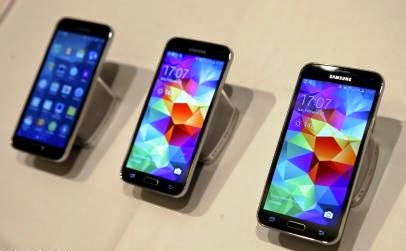
Samsung Galaxy S5 makes global debut
SEOUL - The latest version of Samsung's flagship Galaxy smartphone went on sale worldwide Friday, days after the electronics giant announced it was facing a second consecutive quarter of profit decline.
The Galaxy S5 has a lot riding on it to steer the South Korean firm's profit-making machine back on track as growth in smartphone sales slows, with mature markets like North America and Europe near saturation.
Reviews of the S5 have mostly concluded that it is one of the best high-end smartphones on the market, but there is also a general consensus that it lacks the "wow" factor needed to differentiate it from its predecessors and competitors.
"It can swim, but it won't make any waves," was the verdict of the Wall Street Journal, referring to one innovation in the S5's waterproof covering.
"The Galaxy S5 is a good phone. It earns an unreserved recommendation," said the Washington Post.
"But the truth of the matter is that there's really nothing here that's worth breaking your contract to buy," it added.
Samsung's mobile unit has been the driving force behind the record profits of recent years, and it needs the S5 to perform well as a retort to doom-mongers who say the company lacks a clear strategy to flourish in an increasingly competitive, saturated market.
Samsung made more than 30 per cent of all smartphones sold in the world last year, nearly twice the share of its arch-rival Apple.
But on Tuesday, the company estimated its first quarter operating profit at 8.4 trillion won (S$9.94 billion), marking a second straight year-on-year decline.
As well as the constant challenge from Apple, Samsung has had to face the rapid expansion of smaller rivals like China's Huawei, which has pressured it into rolling out cheaper handsets to woo consumers in emerging markets, especially China.
MH370 hunt goes on after Australia signals great confidence
PERTH, Australia - Ships and planes pursued Saturday the search for the missing Malaysian airliner off Australia after Prime Minister Tony Abbott said he was "very confident" that signals from the black box had been detected.
The Australian-led search for the Boeing 777, which disappeared en route from Kuala Lumpur to Beijing, is racing to gather as many signals as possible to determine an exact resting place before a submersible is sent down to find wreckage.
"Today, Australian defence vessel Ocean Shield continues more focused sweeps with the towed pinger locator to try and locate further signals related to the aircraft's black boxes," JACC said.
Ocean Shield has picked up four signals linked to aircraft black boxes, with the first two analysed as being consistent with those from aircraft flight recorders.
The beacons on the plane's flight data and cockpit voice recorders have a normal battery lifespan of around 30 days. MH370 vanished March 8.
AP-3C Orion surveillance aircraft were also carrying out acoustic searches in conjunction with Ocean Shield, the statement said adding that the British oceanographic ship HMS Echo was also working in the area.
Saturday's total search zone covers 41,393 square kilometres (15,982 square miles) and the core of the search zone lies 2,330 kilometres (1,450 miles) northwest of Perth.
"This work continues in an effort to narrow the underwater search area for when the Autonomous Underwater Vehicle is deployed," JACC said adding that there have been no confirmed signal detections over the past 24 hours.
Sunday, February 16, 2014
An atheist meets an al-Shabab 'recruiter'
Abubakar Shariff Ahmed is
not a hard man to find. Ask around in the Majengo area of Mombasa and
people will know where he lives.
But ask around too conspicuously and you are likely to arouse suspicion. Mr Ahmed is perhaps better known by his nickname, Makaburi. It means "graveyard" in Swahili.
His name features on US and UN sanctions lists of people suspected of involvement in terrorism - accused of recruiting young Kenyan Muslims for violent militant activity in Somalia.
He himself believes the Kenyan police will one day try to kill him. So he is careful about his security.
We had made an appointment to see him one recent, sweltering afternoon, as the shadows lengthened on Majengo's dusty backstreets. We parked outside a pink-coloured apartment block, next to a car mechanic's workshop.
I wandered into a courtyard. It seemed empty. Suddenly, the clatter of flip flops on concrete and the cries of boys kicking a football. I asked one of them if he knew where Makaburi was. Not around, he shrugged.
I went back outside to wait. Two slightly older teenagers, with serious-looking beards, were by now sitting against the wall, next to a defunct fridge with a Coca Cola logo peeling off the side.
From Our Own Correspondent
- Insight and analysis from BBC correspondents, journalists and writers from around the world
- Broadcast on Radio 4 and BBC World Service
"Where is Makaburi?" I asked. No response.
So we sat there without talking, listening to the sounds of
the neighbourhood drift on the evening air, still and heavy with
humidity. Finally, he showed. Makaburi is one of those large men who carries his weight well - he moves slowly, but he is quick to smile and he exudes that easy-going manner that comes with self confidence.
We recorded an interview in his fourth floor flat - the two bearded youths came with us, watching proceedings with ill-concealed suspicion and hostility.
Makaburi's manner may be charming but his beliefs are uncompromising. The time is near he told me. An army of Allah will rise up out of the desert. It will come bearing a black flag and establish a global Islamic caliphate.
He denies recruiting for al-Shabab, or calling on his followers to travel to Somalia to fight.
"I do not have any followers," he says at one point. I nod towards the bearded teenagers. "Who are they?" I ask. "They have come to ask my advice," he says.
“Start Quote
MakaburiI have not listened to music for more than a decade... where there is music, there is ungodliness”
His advice is that, if Islam is under attack, which he says it is, then it is every Muslim's duty to wage jihad.
After the interview we sat together on the roof where the
breeze had picked up and the air was beginning to cool. "Let me invite
you to Islam," he said, breaking once more into that charming smile. I smiled back. "Regretfully," I said, "I am an atheist."
He screwed up his face, and waved towards the two bearded students, loitering now next to a nearby pigeon coop.
"Look at them," he said. "Each from a different Kenyan tribe, and me from yet another. But thanks to Islam, we are brothers. Religion brings us together."
I countered with a story I had once heard on this very programme. A BBC reporter in Bosnia, during the war in the 1990s, had asked an elderly gentleman whether he was a Croat or a Muslim?
The man's reproachful response had struck home: "I am a musician," he had said. Music could unite where religion divided. Makaburi was unimpressed.
"Everywhere there is music, there is ungodliness," he said
He told me a story about a sailor he had known who had spent a long time at sea aboard a cargo ship. According to custom, after going to the toilet, he would wash instead of wipe.
But he was the only Muslim on board, and eventually the other sailors confronted him about the splashes of water around the loo. Could he stop it please, they found it unhygienic.
They were sitting at breakfast and there was a can of condensed milk open on the table. Makaburi's sailor friend took the hand of one of his colleagues and dabbed it with some of the sweet sticky substance.
"Now wipe it off with a tissue," he told him, "then lick your hand. Tell me does it still taste of condensed milk?"
The sailor did so and admitted that yes, his hand still tasted sweet.
Did his hand still taste of milk? It did not. The point was made.
"But surely this is not what it all boils down to," I protested. "Of course not," Makaburi beamed. "But let me give you a copy of the Koran," he pleaded. "You read it, you will see."
I promised I would, but on one condition. Would Makaburi in return listen to my favourite jazz album, and tell me honestly what he thought?
He looked disgusted. "No," he said, "no way. I have not listened to music for more than a decade." And so we parted, our cultural exchange, between atheist and Islamist, unconsummated.
More healing sleep for newborns
Sleeping like a baby is
an oft-used cliche. But while sleep is crucial for sick and premature
babies to grow and recover, it can be difficult in a bright, noisy
hospital.
However those in a specially-designed ward in Bath can be confident of getting plenty of rest.When we try to soothe a baby at home we keep the bedroom dark and quiet. Yet many sick babies are cared for in hospital wards that are neither particularly restful, dark nor quiet.
"There's not usually any controllable light in a hospital, it's very brightly lit and noisy - a technical environment," says Bernie Marden, a consultant neonatologist at the Royal United Hospital in Bath.
The nappy sensor
The new neonatal ward he runs has been designed with the needs
of the families, babies and clinicians in mind - resulting in a fifth
more sleep for the infants. To check that the new unit provided a better environment for the babies a special movement monitor was created to record the babies' behaviour.
The man behind the device is Professor Mark Tooley, head of medical physics at the hospital.
It is about the same size and shape as a domino and even though it is a relatively simple device, there were challenges in its design.
"We had to make sure it couldn't get hot or interfere with the baby's wellbeing in any way. The hospital's ethics committee were rightly very strict about this," he said.
It contains three accelerometers, to detect movement in three different planes and this information is fed wirelessly to a computer. The device's battery can last up to five weeks.
Calming Putting it under the babies' armpit was the initial idea but the ethics committee said no.
"Putting it onto the nappy seemed the ideal solution.. but we did lose a few when nappies were changed because they were white and became almost invisible. We have now put a colourful sticker on them."
Baby Laila and her twin sister Aicha were born nearly three months early and will stay in the neonatal unit until around their original due date.
Their mother Samantha Rhodes relaxes in a comfortable reclining chair, with Aisha cradled on her chest.
Laila and Aicha in the new unit with their mother Samantha
Both girls are now both feeding well and growing in the peaceful, dimly-lit neonatal unit. Samantha and her daughters will be here for quite a while - probably until close to their original due date - so it is just as well they feel at home here: "It's not like a hospital, it's really relaxing."
It's not just premature babies who need extra help and support.
One in 10 of all babies born at this hospital will spend some time in the neonatal unit for a variety of reasons - usually because they are premature or the stress of birth.
Bernie Marden says: "In the new unit we have noticed that materials like wood have encouraged a calming environment - the families tend to tone down their voices.
"In the babies we studied we found that they had 20% more sleep here in the new unit - and while they're resting they're growing, and recovering.
"There is a slightly noisier time during the morning but after then it quietens down again. The overall noise level dipped by eight decibels, compared with the old unit. And the parents are more involved in their care."
Flatpack ward The architects behind the new unit - Fielden Clegg Bradley Studios - had never built a healthcare facility before.
Natural light streams into the new neonatal unit at the Royal United Hospital in Bath
Jo Wright, who was in charge of the project, said: "In the old unit space was very tight, everyone was on top of each other. We didn't want to go the tried-and-tested route.
"The use of natural materials like wood came out of a desire to be sustainable. We obviously had to verify it was OK with the infection control team.
"Much of it came as a flatpack and minimised disruption as we were building close to the delivery suite."
The impact of the new neonatal unit was evaluated by Mike Osborn - a clinical psychologist at the hospital who specialises in supporting patients affected by chronic pain and cancer.
"The old unit had no natural light - it was like being inside a hot, dusty submarine, you couldn't tell if it was day or night.
'Less anxious and tense' "And because babies are small there was a feeling that the department could be small, but it was difficult for the mums to get to their babies it was so cramped."
The parents appear to benefit also from the light and space in the new unit - the bar stools they used to sit on have been replaced with reclining comfortable chairs.
"I used to get called down to parents in a panic - as if they'd had 17 espresso coffees. Now they're less anxious and tense and I sometimes have to wake them up to talk to them."
Breastfeeding rates have gone up - in the new unit 90% of the babies go home breastfeeding, compared with 64% in the old unit.
Mike Osborn says the positive experience in the neonatal unit has provided a blueprint for the rest of his hospital: "We are hoping to rebuild our cancer department and now we have a benchmark for building compassionate environments here and elsewhere.
"Treatments can be horrible but we can do something to soothe our patients."
Speed dating: Why are women more choosy?
Women are twice as choosy as men when they go speed dating, research suggests. Why might that be?
Trying to work out who is single in a bar, approach them and
asking them out before you know anything about them is not a very
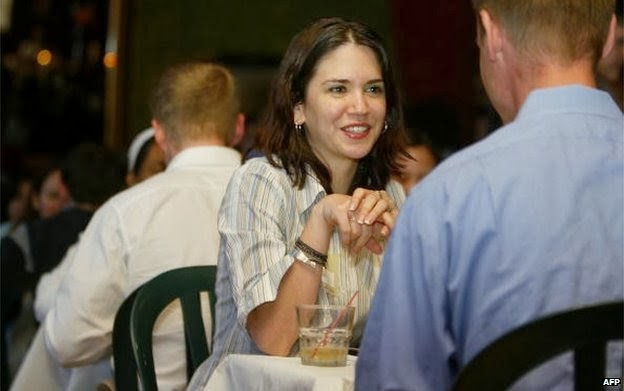
efficient way of finding a girlfriend or boyfriend.There is a solution - speed dating, where a group of singles meet at an event in a bar or cafe. The men move from table to table for a fleeting date with each woman, lasting typically between three to four minutes.
Afterwards the participants tell the organisers, often online, which people they want to see again.
A recent study into speed dating habits concluded that if men and women go to an evening and have 22 separate dates, men are keen to see about five women again, while women would only choose to see two again, on average.
That means that for every offer a woman makes, she has roughly a 50-50 chance that the man will want to see her again too.
But for every offer a man makes, he only has a one in five chance that the desire to meet again is reciprocated.
More or Less: Behind the stats
The research
was done by economists Michele Belot from the University of Edinburgh
and her colleague Marco Francesconi from the University of Essex, who
collected data from 84 speed dating events involving 3,600 people in the
UK.
This controlled environment is something that excites some
economists as they are perfect for observing market forces at work- in
this case the dating market. But why are men less fussy?
"This is something that evolutionary psychologists and biologists do recognise," says Belot. "We know that across a whole range of behaviours women tend to take fewer risks.
"They relate this to the fact that making mistakes are much more costly for women than for men because of childbearing. So obviously if you make a mistake in dating the wrong man and having a relationship with the wrong man, you might have nine months carrying a child, then caring for a child. While for men, the costs are lower."
Other academic work suggests that because men historically have not been so involved in parenting, they devote more time to "short-term mating", so they're not looking further than a date.
A study in the US, on the other hand, suggests the difference might simply be down to the seating arrangements, because the convention is for women to sit still at the events, while men move round and approach each woman.
The researchers found that when the roles were reversed at speed dating events, and women moved round to approach the men, they found that women made more offers than they did at events when they sat still. One possible theory is that the person who moves has more confidence.
"For both men and women, education and professional status matters. We found that women prefer taller men and men prefer slimmer women," says Belot.
Perhaps this is not a big surprise. But it turns out - people are often ready to compromise on these preferences.
So, if a woman likes academic men, but she goes speed dating one night and no one is particularly academic, she will lower her expectations on this occasion, and instead pick men who next best fit her criteria.
Belot thinks one explanation is that people who go to a speed dating event assume that is representative of the pool of available single people.
But if you break out of the mould of what you think you want, it could actually be beneficial for society at large.
People marry people very similar to themselves - from the same socio-economic background for example. And economists argue that this stops social mobility between generations.
For instance, people from rich privileged backgrounds marry each other, while people from more disadvantaged backgrounds marry each other.
But speed dating shows that people are not too fixed in their views of who they should date, says Belot, if they are given the opportunity.
"It's interesting to see [with speed dating] it gives a bit of hope that if you do mix people, they do tend to mix."
Ukraine protesters quit key building
Ukraine protesters are
vacating city hall in Kiev, the symbolic centre of prolonged
anti-government demonstrations, eyewitnesses say.
"City hall is almost completely evacuated", opposition spokesman Ruslan Andriyko told AFP.The government had promised to drop all charges against demonstrators if they vacate government buildings and lift roadblocks by Monday.
City hall has been occupied by protesters for more than two months.
The protests started in November when President Viktor Yanukovych abandoned plans to sign a far-ranging association agreement with the EU.
Instead, he advocated closer trade relations with Russia, which dominated Ukraine for centuries until the fall of the Soviet Union in 1991.
Prisoners released People began walking out of the building on Sunday morning.
The Swiss ambassador in Kiev entered the building soon afterwards in order to help transfer the building to the control of the authorities.
Switzerland currently holds the rotating presidency of the Organisation for Security and Cooperation in Europe.
On Friday authorities released the last of 243 prisoners who were arrested during the unrest.
Mr Yanukovich passed an amnesty law earlier this month and agreed to negotiate with the opposition after at least four people were killed in protests.
This weekend, some opposition members continued to call for his departure, and another demonstration is due to place in Kiev's central Independence Square.
"The only subject of negotiation with Yanukovych is the conditions of his departure," jailed opposition leader Yulia Tymoshenko said on Saturday.
She went to accuse the Ukrainian president of being under the control of Russia's Vladimir Putin, his major international backer.
Protesters created their own ad-hoc security forces in the capital Kiev
Morsi spying and terror trial opens
Deposed Egyptian
President Mohammed Morsi has begun a new trial, on charges of espionage
and conspiring to commit acts of terror.
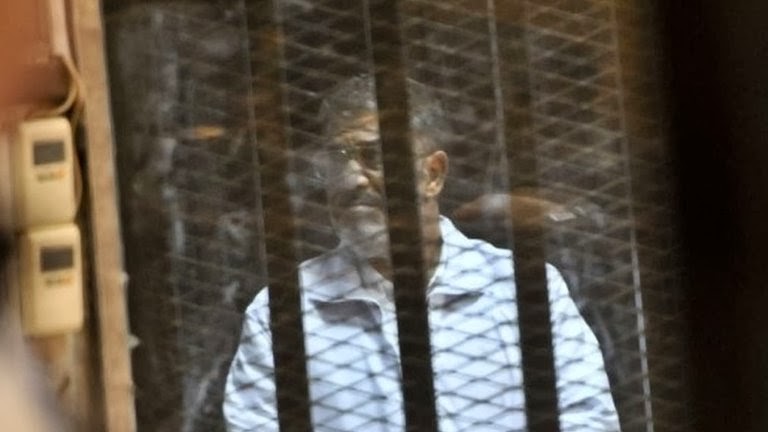
He and 35 others are accused of working with Lebanese and Palestinian groups to carry out attacks in Egypt.The charges are one of four prosecutions that the Islamist former leader now faces.
Mr Morsi was ousted by the military last July following mass street protests against his rule.
Since then there has been a severe crackdown on his Muslim Brotherhood group, as well as on other activists seen as hostile to the military-backed government.
The Brotherhood has been declared a terrorist organisation and authorities have punished any public show of support for it.
Other senior Brotherhood figures are also facing a raft of charges, including supreme guide Mohammed Badie and his deputy and former presidential candidate Khairat al-Shater.
At least 1,000 people have died in clashes between security forces and pro-Morsi protesters since he was deposed, with thousands more arrested.
Morsi defiant Mr Morsi was brought to Cairo's police academy on Sunday morning by helicopter from the Burj al-Arab prison where he is being held.
In this latest trial, Mr Morsi is accused of collaborating with the Palestinian movement Hamas, Lebanon's Hezbollah and Iran's Revolutionary Guards. If convicted he could receive the death penalty.
Four trials of Mohammed Morsi
- Incitement of supporters to commit violence and murder during break-up of December 2012 protest
- Conspiring with foreign organisations (Hamas and Hezbollah) to commit terrorist acts
- Murder of prison officers in jailbreak during 2011 uprising against President Mubarak
- Insulting the judiciary
Proceedings in two other trials have already begun:
- The first opened in November on charges of inciting the killing of protesters near the presidential palace when he was in office in 2012.
- In January another trial opened concerning his escape from prison in a jailbreak in 2011, during which police officers were killed.
- The fourth trial will be on charges of insulting the judiciary.
In his previous court appearances Mr Morsi has struck a defiant tone, refusing to recognise the legitimacy of the court and insisting that he is still the rightful president.
During that court appearance, from inside a glassed-in defendants' cage, he shouted: "I am the president of the republic. How can I be kept in a dump for weeks?"
Wednesday, December 11, 2013
Nelson Mandela biography
Synopsis
Nelson Mandela was born on July 18, 1918, in Mveso,
Transkei, South Africa. Becoming actively involved in the anti-apartheid
movement in his 20s, Mandela joined the African National Congress in
1942. For 20 years, he directed a campaign of peaceful, nonviolent
defiance against the South African government and its racist policies.
In 1993,
Quotes
"I hate race discrimination most intensely and in all its
manifestations. I have fought it all during my life; I fight it now, and
will do so until the end of my days."
– Nelson Mandela
Mandela and South African President F.W. de Klerk
were jointly awarded the Nobel Peace Prize for their efforts to
dismantle the country's apartheid system. In 1994, Mandela was
inaugurated as South Africa's first black president. In 2009, Mandela's birthday
(July 18) was declared "Mandela Day" to promote global peace and
celebrate the South African leader's legacy. Mandela died at his home in
Johannesburg on December 5, 2013, at age 95.
Early Life
Nelson Mandela was born Rolihlahla Mandela on July 18, 1918, in the tiny village of Mvezo, on the banks of the Mbashe River in Transkei, South Africa. "Rolihlahla" in the Xhosa language literally means "pulling the branch of a tree," but more commonly translates as "troublemaker."Nelson Mandela's father, who was destined to be a chief, served as a counselor to tribal chiefs for several years, but lost both his title and fortune over a dispute with the local colonial magistrate. Mandela was only an infant at the time, and his father's loss of status forced his mother to move the family to Qunu, an even smaller village north of Mvezo. The village was nestled in a narrow grassy valley; there were no roads, only foot paths that linked the pastures where livestock grazed. The family lived in huts and ate a local harvest of maize, sorghum, pumpkin and beans, which was all they could afford. Water came from springs and streams and cooking was done outdoors. Mandela played the games of young boys, acting out male rights-of-passage scenarios with toys he made from the natural materials available, including tree branches and clay.
At the suggestion of one of his father's friends, Mandela was baptized in the Methodist Church. He went on to become the first in his family to attend school. As was custom at the time, and probably due to the bias of the British educational system in South Africa, Mandela's teacher told him that his new first name would be Nelson.
When Mandela was 9 years old, his father died of lung disease, causing his life to change dramatically. He was adopted by Chief Jongintaba Dalindyebo, the acting regent of the Thembu people—a gesture done as a favor to Mandela's father, who, years earlier, had recommended Jongintaba be made chief. Mandela subsequently left the carefree life he knew in Qunu, fearing that he would never see his village again. He traveled by motorcar to Mqhekezweni, the provincial capital of Thembuland, to the chief's royal residence. Though he had not forgotten his beloved village of Qunu, he quickly adapted to the new, more sophisticated surroundings of Mqhekezweni.
When Mandela was 16, it was time for him to partake in the traditional African circumcision ritual to mark his entrance into manhood. The ceremony of circumcision was not just a surgical procedure, but an elaborate ritual in preparation for manhood. In African tradition, an uncircumcised man cannot inherit his father's wealth, marry or officiate at tribal rituals. Mandela participated in the ceremony with 25 other boys. He welcomed the opportunity to partake in his people's customs and felt ready to make the transition from boyhood to manhood. His mood shifted during the proceedings, however, when Chief Meligqili, the main speaker at the ceremony, spoke sadly of the young men, explaining that they were enslaved in their own country. Because their land was controlled by white men, they would never have the power to govern themselves, the chief said. He went on to lament that the promise of the young men would be squandered as they struggled to make a living and perform mindless chores for white men. Mandela would later say that while the chief's words didn't make total sense to him at the time, they would eventually formulate his resolve for an independent South Africa.
From the time Mandela came under the guardianship of Regent Jongintaba, he was groomed to assume high office, not as a chief, but a counselor to one. As Thembu royalty, Mandela attended a Wesleyan mission school, the Clarkebury Boarding Institute and Wesleyan College, where, he would later state, he achieved academic success through "plain hard work." He also excelled at track and boxing. Mandela was initially mocked as a "country boy" by his Wesleyan classmates, but eventually became friends with several students, including Mathona, his first female friend.
In 1939, Mandela enrolled at the University College of Fort Hare, the only residential center of higher learning for blacks in South Africa at the time. Fort Hare was considered Africa's equivalent of the University of Oxford or Harvard University, drawing scholars from all parts of sub-Sahara Africa. In his first year at the university, Mandela took the required courses, but focused on Roman Dutch law to prepare for a career in civil service as an interpreter or clerk—regarded as the best profession that a black man could obtain at the time.
Mandela's Imprisonment
A few weeks after Mandela returned home, Regent Jongintaba announced that he had arranged a marriage for his adopted son. The regent wanted to make sure that Mandela's life was properly planned, and the arrangement was within his right, as tribal custom dictated. Shocked by the news, feeling trapped and believing that he had no other option than to follow this recent order, Mandela ran away from home. He settled in Johannesburg, where he worked a variety of jobs, including as a guard and a clerk, while completing his bachelor's degree via correspondence courses. He then enrolled at the University of Witwatersrand in Johannesburg to study law.Mandela soon became actively involved in the anti-apartheid movement, joining the African National Congress in 1942. Within the ANC, a small group of young Africans banded together, calling themselves the African National Congress Youth League. Their goal was to transform the ANC into a mass grassroots movement, deriving strength from millions of rural peasants and working people who had no voice under the current regime. Specifically, the group believed that the ANC's old tactics of polite petitioning were ineffective. In 1949, the ANC officially adopted the Youth League's methods of boycott, strike, civil disobedience and non-cooperation, with policy goals of full citizenship, redistribution of land, trade union rights, and free and compulsory education for all children.
For 20 years, Mandela directed peaceful, nonviolent acts of defiance against the South African government and its racist policies, including the 1952 Defiance Campaign and the 1955 Congress of the People. He founded the law firm Mandela and Tambo, partnering with Oliver Tambo, a brilliant student he'd met while attending Fort Hare. The law firm provided free and low-cost legal counsel to unrepresented blacks.
In 1956, Mandela and 150 others were arrested and charged with treason for their political advocacy (they were eventually acquitted). Meanwhile, the ANC was being challenged by Africanists, a new breed of black activists who believed that the pacifist method of the ANC was ineffective. Africanists soon broke away to form the Pan-Africanist Congress, which negatively affected the ANC; by 1959, the movement had lost much of its militant support.
Nelson Mandela was incarcerated on Robben Island for 18 of his 27 years in prison. During this time, he contracted tuberculosis and, as a black political prisoner, received the lowest level of treatment from prison workers. However, while incarcerated, Mandela was able to earn a Bachelor of Law degree through a University of London correspondence program.
A 1981 memoir by South African intelligence agent Gordon Winter described a plot by the South African government to arrange for Mandela's escape so as to shoot him during the recapture; the plot was foiled by British intelligence. Mandela continued to be such a potent symbol of black resistance that a coordinated international campaign for his release was launched, and this international groundswell of support exemplified the power and esteem that Mandela had in the global political community.
In 1982, Mandela and other ANC leaders were moved to Pollsmoor Prison, allegedly to enable contact between them and the South African government. In 1985, President P.W. Botha offered Mandela's release in exchange for renouncing armed struggle; the prisoner flatly rejected the offer. With increasing local and international pressure for his release, the government participated in several talks with Mandela over the ensuing years, but no deal was made. It wasn't until Botha suffered a stroke and was replaced by Frederik Willem de Klerk that Mandela's release was finally announced—on February 11, 1990. De Klerk also unbanned the ANC, removed restrictions on political groups and suspended executions.
Prison Release and Presidency
Upon his release from prison, Nelson Mandela immediately urged foreign powers not to reduce their pressure on the South African government for constitutional reform. While he stated that he was committed to working toward peace, he declared that the ANC's armed struggle would continue until the black majority received the right to vote.In 1991, Mandela was elected president of the African National Congress, with lifelong friend and colleague Oliver Tambo serving as national chairperson. Mandela continued to negotiate with President F.W. de Klerk toward the country's first multiracial elections. White South Africans were willing to share power, but many black South Africans wanted a complete transfer of power. The negotiations were often strained and news of violent eruptions, including the assassination of ANC leader Chris Hani, continued throughout the country.
Mandela had to keep a delicate balance of political pressure and intense negotiations amid the demonstrations and armed resistance.
In 1993, Mandela and President de Klerk were jointly awarded the Nobel Peace Prize for their work toward dismantling apartheid. And due in no small part to their work, negotiations between black and white South Africans prevailed: On April 27, 1994,
Also in 1994, Mandela published an autobiography, Long Walk to Freedom, much of which he had secretly written while in prison. The following year, he was awarded the Order of Merit.
From 1994 until June 1999, Mandela worked to bring about the transition from minority rule and apartheid to black majority rule. He used the nation's enthusiasm for sports as a pivot point to promote reconciliation between whites and blacks, encouraging black South Africans to support the once-hated national rugby team. In 1995, South Africa came to the world stage by hosting the Rugby World Cup, which brought further recognition and prestige to the young republic.
Mandela also worked to protect South Africa's economy from collapse during his presidency. Through his Reconstruction and Development Plan, the South African government funded the creation of jobs, housing and basic health care. In 1996, Mandela signed into law a new constitution for the nation, establishing a strong central government based on majority rule, and guaranteeing both the rights of minorities and the freedom of expression.
Retirement and Later Career
By the 1999 general election, Nelson Mandela had retired from active politics. He continued to maintain a busy schedule, however, raising money to build schools and clinics in South Africa's rural heartland through his foundation, and serving as a mediator in Burundi's civil war. He also published a number of books on his life and struggles, among them No Easy Walk to Freedom; Nelson Mandela: The Struggle is my Life; and Nelson Mandela's Favorite African Folktales.Mandela was diagnosed and treated for prostate cancer in 2001. In June 2004, at the age of 85, he announced his formal retirement from public life and returned to his native village of Qunu.
On July 18, 2007, Mandela convened a group of world leaders, including Graca Machel (whom Mandela would wed in 1998), Desmond Tutu, Kofi Annan, Ela Bhatt, Gro Harlem Brundtland, Jimmy Carter, Li Zhaoxing, Mary Robinson and Muhammad Yunus, to address some of the world's toughest issues. Aiming to work both publicly and privately to find solutions to problems around the globe, the group was aptly named "The Elders." The Elders' impact has spanned Asia, the Middle East and Africa, and their actions have included promoting peace and women's equality, demanding an end to atrocities, and supporting initiatives to address humanitarian crises and promote democracy.
In addition to advocating for peace and equality on both a national and global scale, in his later years, Mandela remained committed to the fight against AIDS—a disease that killed Mandela's son, Makgatho, in 2005.
In Recent Years
Nelson Mandela made his last public appearance at the final match of the World Cup in South Africa in 2010. He remained largely out of the spotlight in his later years, choosing to spend much of his time in his childhood community of Qunu, south of Johannesburg. He did, however, visit with U.S. first lady Michelle Obama, wife of President Barack Obama,during her trip to South Africa in 2011.After suffering a lung infection in January 2011, Mandela was briefly hospitalized in Johannesburg to undergo surgery for a stomach ailment in early 2012. He was released after a few days, later returning to Qunu. Mandela would be hospitalized many times over the next several years—in December 2012, March 2013 and June 2013—for further testing and medical treatment relating to his recurrent lung infection. Following his June 2013 hospital visit, Mandela's wife, Graca Machel, canceled a scheduled appearance in London to remain at her husband's his side, and his daughter, Zenani Dlamini, Argentina's South African ambassador, flew back to South Africa to be with her father. Jacob Zuma, South Africa's president, issued a statement in response to public concern over Mandela's March 2013 health scare, asking for support in the form of prayer: "We appeal to the people of South Africa and the world to pray for our beloved Madiba and his family and to keep them in their thoughts," Zuma said.
Death and Legacy
On December 5, 2013, at the age of 95, Nelson Mandela died at his home in Johannesburg, South Africa. Zuma released a statement later that day, in which he spoke to Mandela's legacy: "Wherever we are in the country, wherever we are in the world, let us reaffirm his vision of a society ... in which none is exploited, oppressed or dispossessed by another," he said. For decades to come, Nelson Mandela will continue to be a source of inspiration for civil rights activists worldwide.In 2009, Mandela's birthday (July 18) was declared Mandela Day, an international day to promote global peace and celebrate the South African leader's legacy. According to the Nelson Mandela Centre of Memory, the annual event is meant to encourage citizens worldwide to give back the way that Mandela has throughout his lifetime. A statement on the Nelson Mandela Centre of Memory's website reads: "Mr. Mandela gave 67 years of his life fighting for the rights of humanity. All we are asking is that everyone gives 67 minutes of their time, whether it's supporting your chosen charity or serving your local community."
Personal Life
Mandela was married three times, beginning with Evelyn Ntoko Mase (m. 1944-1957). The couple had four children together: Madiba Thembekile, Makgatho (d. 2005), Makaziwe and Maki. Mandela wed Winnie Madikizela in 1958; the couple had two daughters together, Zenani and Zindziswa, before splitting in 1996. Two years later, Mandela married Graca Machel, with whom he remained until his death in 2013.Barack Obama leads Nelson Mandela memorial tributes
The American president said the world would never see another man like Nelson Mandela, but called out world leaders who claimed to embrace his legacy while resisting change
US president Barack Obama told the world today that we will never see another man like Nelson Mandela - but called on young people around the globe to "make his life's work your own".
In a powerful speech at a huge memorial service for the late South African president in Johannesburg, the American leader paid touching tribute to the man who he said had inspired his own political ambitions, and made him strive to be a better man.
But Obama also called out those who claim to "embrace" Madiba's legacy of racial reconciliation, "but passionately resist even modest reforms".
He said: "There are too many leaders who claim solidarity with Madiba’s struggle for freedom, but do not tolerate dissent from their own people. And there are too many of us who stand on the sidelines, comfortable in complacency or cynicism when our voices must be heard."
Speaking at the FNB Stadium before a crowd of more than 80,000 - including representatives from more than 100 countries - President Obama said he was there to mark a life "unlike any other" and the "last great liberator of the 20th century".
He drew parallels between Mandela's fight against the apartheid regime and the civil rights movement in the United States, saying Madiba's achievements meant it was tempting to remember him as a "serene and smiling icon".
But he said: "It was precisely because he could admit to imperfection - because he could be so full of good humour, even mischief, despite the heavy burdens he carried - that we loved him so."
Obama said Mandela showed the world the power of action and ideas, which he then "chiseled into laws and institutions".
He went on to say that although his death was a time for mourning, Mandela's passing should also prompt the question: "How well have I applied his lessons in my own life?"
He added: "It is a question I ask myself - as a man and as a President."
He said he and wife Michelle had benefited from the struggles of people like Mandela, and reminded the crowd that Mandela's story was part of his own.
He concluded: "We will never see the likes of Nelson Mandela again. But let me say to the young people of Africa, and young people around the world - you can make his life’s work your own.
"Over 30 years ago, while still a student, I learned of Mandela and the struggles in this land. It stirred something in me. It woke me up to my responsibilities, to others, and to myself, and set me on an improbable journey that finds me here today.
"And while I will always fall short of Madiba’s example, he makes me want to be a better man. He speaks to what is best inside us."
US president Barack Obama told the world today that we will never see another man like Nelson Mandela - but called on young people around the globe to "make his life's work your own".
In a powerful speech at a huge memorial service for the late South African president in Johannesburg, the American leader paid touching tribute to the man who he said had inspired his own political ambitions, and made him strive to be a better man.
But Obama also called out those who claim to "embrace" Madiba's legacy of racial reconciliation, "but passionately resist even modest reforms".
He said: "There are too many leaders who claim solidarity with Madiba’s struggle for freedom, but do not tolerate dissent from their own people. And there are too many of us who stand on the sidelines, comfortable in complacency or cynicism when our voices must be heard."
Speaking at the FNB Stadium before a crowd of more than 80,000 - including representatives from more than 100 countries - President Obama said he was there to mark a life "unlike any other" and the "last great liberator of the 20th century".
He drew parallels between Mandela's fight against the apartheid regime and the civil rights movement in the United States, saying Madiba's achievements meant it was tempting to remember him as a "serene and smiling icon".
But he said: "It was precisely because he could admit to imperfection - because he could be so full of good humour, even mischief, despite the heavy burdens he carried - that we loved him so."
Obama said Mandela showed the world the power of action and ideas, which he then "chiseled into laws and institutions".
He went on to say that although his death was a time for mourning, Mandela's passing should also prompt the question: "How well have I applied his lessons in my own life?"
He added: "It is a question I ask myself - as a man and as a President."
He said he and wife Michelle had benefited from the struggles of people like Mandela, and reminded the crowd that Mandela's story was part of his own.
He concluded: "We will never see the likes of Nelson Mandela again. But let me say to the young people of Africa, and young people around the world - you can make his life’s work your own.
"Over 30 years ago, while still a student, I learned of Mandela and the struggles in this land. It stirred something in me. It woke me up to my responsibilities, to others, and to myself, and set me on an improbable journey that finds me here today.
"And while I will always fall short of Madiba’s example, he makes me want to be a better man. He speaks to what is best inside us."
Monday, November 18, 2013
Dozens dead in Russian plane crash
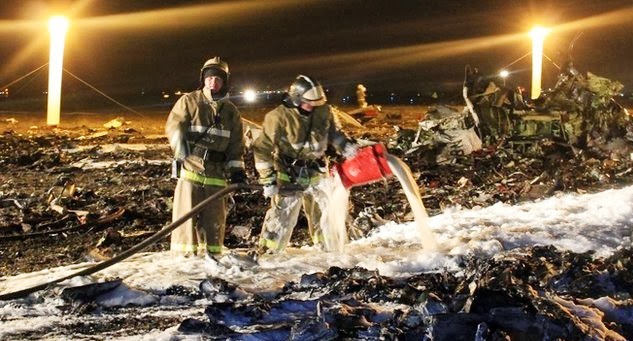
A passenger plane has crashed at an airport in the Russian city of Kazan, killing all 50 people on board.
The Boeing 737 had taken off from Moscow and was trying to land but exploded on impact at about 19:20 local time (15:20 GMT), officials said.
The Emergencies Ministry said there were 44 passengers and six crew members on the Tatarstan Airlines flight.
Investigators are now looking at whether a technical failure or crew error may have caused the crash.
Investigative committee official Vladimir Markin told Rossiya 24 TV that experts were checking whether poor quality fuel and weather conditions could have been contributing factors.
It was raining in Kazan when the aircraft crashed.
Among the dead was Irek Minnikhanov, a son of the president of the Russian Republic of Tatarstan, according to the official passenger list.
The UK Foreign Office confirmed that a British national died in the crash.
"We are in touch with local authorities and providing consular assistance to those affected," it said in a statement.
The victims also included two children.
Russian President Vladimir Putin "expressed his condolences to the relatives of the victims in this horrible disaster", his spokesman Dmitry Peskov was quoted by the news agency Interfax as saying.
A government commission has been set up to investigate the cause, he said.
Reports said the pilot, 47-year-old Rustem Salikhov, had already tried to land several times before crashing.
The crew had said they were not ready to land because of technical problems, Russian news agencies report.
A journalist who said she had flown on the same aircraft from Kazan to Moscow earlier on Sunday told Russia's Channel TV that there was a strong vibration during the landing in the Russian capital.
"When we were landing it was not clear whether there was a strong wind, although in Moscow the weather was fine, or some kind of technical trouble or problem with the flight," said Lenara Kashafutdinova.
"We were blown in different directions, the plane was tossed around. The man sitting next to me was white as a sheet."
The plane had been in service since 1990, Russian officials are quoted as saying by the local media.
The airport in Kazan - the capital of Tatarstan - has been closed since the accident and is not expected to re-open until Monday afternoon.
Kazan lies about 720km (450 miles) east of Moscow.
Family members and friends of the victims are getting help by a team of psychologists. The government also promised financial compensation.
The BBC's Daniel Sandford in Moscow says that although some of Russia's biggest airlines now have very good reputations, frequent crashes by smaller operators mean the country has one of the worst air safety records in the world.
Subscribe to:
Posts (Atom)